

Virtually every industry in every country of the world continues to contribute directly or indirectly to greenhouse gas (GHG) emissions through the production and consumption of goods and services. The transportation industry is no exception.
According to the EPA, there are three overarching ways the transportation industry can help lower the impact to the climate:
- Technology. Increase the efficiency of vehicle technology.
- Activity. Change how goods are transported.
- Fuel. Use lower-carbon fuels.
At DHX-Dependable Hawaiian Express, early on we adopted a myriad of green practices. We firmly believe it’s our responsibility to help ensure future populations have clean air, water, materials and resources.
Our commitment to supporting environmental, social and organizational sustainability is evident across our company. It’s written in our employee manuals, on our walls and our website. It’s witnessed in our offices, warehouses, among all employee practices, and verified by many third-party environmental audit companies.
Highlights of our ongoing Green investment:
- Solar systems to help power our facilities
- Skylights to replace artificial light and lower-energy lighting across our operations
- Electric car charging stations for employees
- Tight monitoring of logistics to combat empty runs
- Green practices and electronic technology to maximize utilization per container, ultimately reducing the number of trucks on the road
- Rigorous Sustainability training for drivers including how to reduce idling and highway top speeds, improve driving techniques, maintain correct tire pressure, among other practices.

If you’re in the transportation industry, we assume you’ve also taken major sustainability strides to help the world achieve it’s lofty net-zero emission goals. Regardless of where you are on the Going Green spectrum, here’s a detailed list of some of our Green achievements for inspiration:
- We have purchased carbon offsets in sufficient quantity to operate our warehouses in Honolulu, Maui, Guam, Kona, Seattle and Los Angeles (Rancho Dominguez) on a carbon neutral basis for 2022. See our Carbon Neutral Certificates.
- Our corporate headquarters, Maui and Guam facilities are totally solar sufficient, drawing no or minimal additional energy from the electric grids.
- We have 2% sky lights at various facilities to use more natural lighting.
- We meet the California Air Resources Board’s “sparklist” requirements.
- We are working to estimate our carbon footprint for all our trucking operations and are taking steps to reduce our carbon emissions. See our GreenWay Miles Certified Carrier Audit.
- We are an active partner with Smartway, a U.S. Government EPA partnership with truckers, to improve our use of fuel and oil efficiency, and reduce our emissions. See our SmartWay Certificates.
- In our LA headquarters, we have installed 10 charging stations for employees to use for charging electric vehicles.
- We have installed lower-energy usage models for lighting, converted our Corporate Headquarters and Honolulu terminal lights to LED and use timers in both terminals to increase the energy effectiveness of our HVAC and lighting systems.
- We recycle paper in our LA Corporate headquarters, our San Leandro facility and our Seattle facility. In LA we also separate and recycle wood, plastic, metal and cardboard.
- We replaced our networking and computer server infrastructure after 2010, dropping energy consumption by 33% - 38%.
- Our Hawaii and Guam computer system is designed to allow our employees and customers to be virtually paperless.
- Recently we were named by Inbound Logistics as a Green Supply Chain Partner. As one of the 75 leading companies being profiled, we are regarded for truly “walking the walk” when it comes to commitment to supply chain sustainability and a partner you can turn to when seeking green supply chain management and logistics.
If you’re interested in going with a progressive Green transportation partner, contact one of our experts today. We provide Full Container Load (FCL) and Less Than Container Load (LCL) services from three West Coast ports: Long Beach, Oakland and the Tacoma WA. We also provide international shipping via our sister company, DGX-Dependable Global Express.
If you have questions about moving cargo to or from Hawaii, Alaska, or Guam, contact us today at 800.488.4888. See all of our domestic and international transportation destinations.


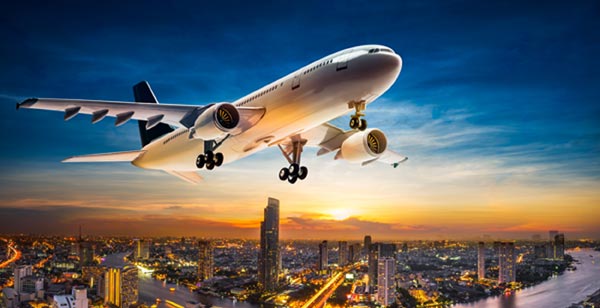

 Hawaii is a unique place to do business because the counties are separated by water. It's essential to understand not only how to ship to Hawaii, but also it's imperative that you find an experienced freight forwarder in Hawaii who will help with your logistics to and from all the Hawaiian islands.


 The key factors to keep in mind when shipping a container to Hawaii are:
 Many factors determine the cost of shipping to Guam. Similar to shipping to Hawaii, the key factors in determining the cost are:

 A common question, when determining how much it costs to ship a container to Hawaii, most of the cost is based on the commodity item(s) being loaded and shipped. Ocean tariffs (import/export taxes) are predicated on content weight; the end use of the commodity: retail, wholesale, personal, or business; the potential of damage of the commodity; etc.
 There are five major items to consider in determining your overall cost to ship Less than Container Load (LCL) freight shipments to either Hawaii or Guam.
 If you’re located on the outer islands of Hawaii, usually the shipping carrier you chose will move your product shipment to
 The cost of ocean freight to or from Guam can pose some complexity for a variety of reasons. The following are shipping factors to consider in determining ocean carriage costs. They include:
 Last month we discussed key factors pertaining to shipping rates to Hawaii and what drives those costs. Now we’d like to help our customers with ideas on how to reduce the shipping cost to Hawaii.
 Here are some factors to consider when shipping your freight containers to Hawaii:
 What is an acceptable transit time for shipping from the U.S.A. to Guam?
 As you may be aware, we’re building a new warehousing facility in Honolulu. To make a long story short, we received the signed agreement to purchase the property, vacant land, on a Saturday during the period of the major league baseball playoff chase in 2017. On that Saturday in September, I decided, like so many LA Dodger players in their quest to win the World Series, to not shave again until the prize was won—in this case our new warehousing facility opening. I then flew over to Oahu when we had to arrange to finance both the land purchase and building construction. I told the bankers that I was growing my beard as a daily reminder of our commitment to getting the project done, so every morning when I stand in front of the mirror, I am reminded of my responsibility to complete our project.